
NUJ holds successful conference on the future of Welsh media
The NUJ Welsh Executive Council (WEC) held a major conference bringing together media workers, community voices and parliamentarians to discuss the future of public interest journalism in Wales.
Titled 'The State of Media in Wales: Shaping Our Future', the bilingual conference was held at Sophia Gardens in Cardiff on Saturday 19 September.
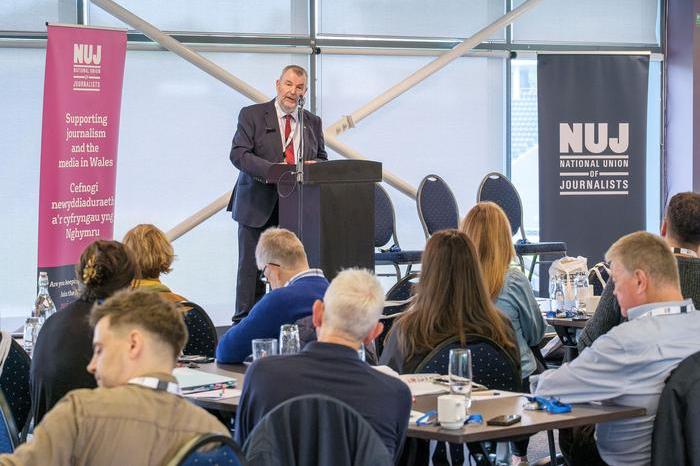
David Nicholson, WEC co-chair, welcomed delegates and explained the origins of the conference. During the pandemic the union launched its News Recovery Plan, which WEC tailored to the Welsh media sector. The Council persuaded the then Media and Culture Minister, Dawn Bowden, to establish the Wales Public Interest Journalism Working Group in 2021. This resulted in the publication of the Of and For Wales report.
Central to the report recommendations is the establishment of an arms-length Wales Media Institute that would perform multiple functions - including distributing public money to journalism in Wales, ending news deserts, and identifying the specific needs of Welsh speakers. “There is an exciting opportunity to learn from the experience of other countries with our Media Institute but create something bespoke for Wales,” said Nicholson.
Nicholson noted the successes of the Working Group - such as the establishment of a dedicated Senedd reporter and the publication of research into media diversity that found women and working class journalists were underrepresented in the industry. Yet the report recommendations are yet to be implemented.
Nicholson described the crisis facing the Welsh media sector, highlighting how places like Port Talbot no longer have a local newspaper where once it had five with over 20 reporters. However Nicholson noted the impressive recent work of Welsh journalists – particularly in providing meticulous information, analysis, and scrutiny during the recent Senedd election, which saw the highest turnout in history with the majority of the Welsh public voting for the first time.
Nicholson said:
“Today we will be addressing some of the biggest questions facing the Welsh media industry.
“How do we combat bad faith actors spreading misinformation and lies to local communities?
“How do we increase media literacy across Wales to help the public navigate the bewildering streams of information available?
“How do we ensure the media industry is properly representative of our communities across Wales?
“How do we nurture and retain the best Welsh journalism talent?
“Today is about discussing ideas and solutions – there is no one correct answer. Public interest journalism is a fragile flower in Wales in both languages – it needs nurturing and support to play its role in our democracy and culture.”
© Si Judd
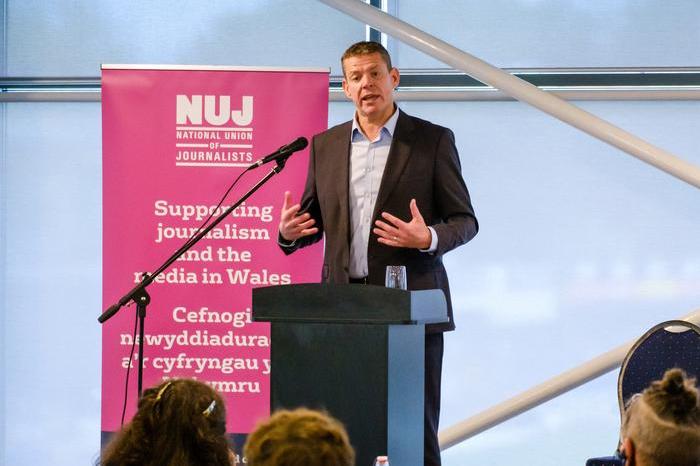
Nicholson introduced Rhun ap Iorwerth, Wales first minister, who formally opened the conference with a keynote address.
A journalist and broadcaster for almost 20 years before being elected, ap Iorwerth said: "My role in the media and as an NUJ member has taught me that journalism is not just a job - it is a public service."
The First Minister noted the deep importance of the Wales Public Interest Journalism Working Group - including the recommendations from the Of and For Wales report. "We believe this country deserves a confident, diverse, and sustainable media landscape rooted in value and ambition."
Without robust journalism and a health media landscape, representation and scrutiny is lost. "When governments make mistakes, as mine no doubt will, they need reporting that holds them to account," said ap Iorwerth.
The First Minister stressed the importance of trade union membership and decent employment standards.
ap Iorwerth said:
"Being a union member reminds us that the media and journalism is also about people. If we want a sustainable media, we need to invest in those people. We need good jobs, proper training opportunities for young people to enter the profession, and diversity in our newsrooms."
© Si Judd
The first plenary session of the day examined the devolution knowledge gap. The panel included: Joe Rossiter, Institute of Welsh Affairs co-director; Cardiff University research associates Dr. Keighley Perkins and Dr. Maxwell Modell, plus award-winning investigative journalist Will Hayward. This was followed by a two breakout workshops delivered by Dan Mason on the use of AI in journalism and Richard Nosworthy on how communications professionals can maximise their impact in the media landscape.
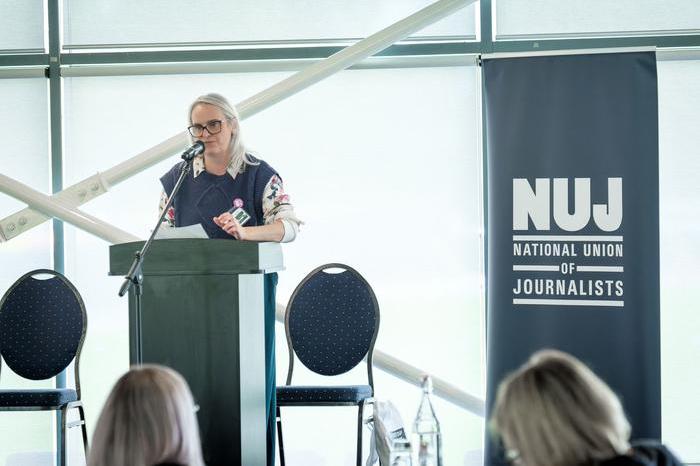
Both workshops were delivered by NUJ Training Wales, a project managed by Rachel Howells, WEC co-chair. Introducing the afternoon session, Howells highlighted the importance of investing in skills and professional development.
Howells said:
“We are very proud to have the opportunity to provide this kind of training throughout the year, thanks to the Welsh Government’s WULF fund. We see how this training changes lives, helping people who need new skills - perhaps due to job loss, a career change, or seeing their job duties shift before their eyes and worrying about keeping up with technical developments, or even young workers trying to break into the industry. These skills, and having a friendly person there to help you through a challenging time, make a huge difference to our learners.”
Howells encouraged delegates to sign up to the NUJ Training Wales mailing list and to contact trainers if they have any specific workplace needs.
© Si Judd
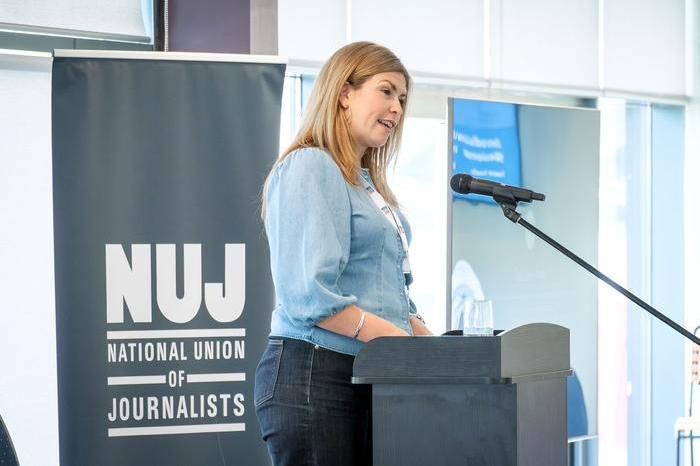
Laura Doel, TUC Cymru general secretary, introduced the conference's afternoon session. Doel started her career as a journalist. After leaving school at 16, she completed a higher education journalism course before becoming a trainee reporter at the Merthyr Express.
Doel said that the loss of local titles results in the loss of people's stories. "As trade unionists, we often talk about the voice of workers and the voice of communities [...] Journalism makes these voices heard," said Doel, who noted that the closure of local titles can mean that the information received is not reflective of life in Welsh communities or the devolution settlement." The NUJ has rightly highlighted the issue of Wales' information deficit for many years. When newsrooms shrink, fewer stories are covered. When journalists are lost, expertise is lost. When scrutiny weakens, accountability weakens."
Doel highlighted the NUJ's successful campaign to establish the Wales Public Interest Journalism Working Group and the importance of the government implementing the recommendations of the Of and For Wales report, such as developing healthy levels of media literacy and establishing a Welsh Media Institute to support a well-funded, plural and diverse media landscape.
Doel underlined journalism's role in normalising the use of Welsh language in everyday life and improving social unity. Doel said that the work of the NUJ in Wales was integral to the TUC's 'United Cymru' campaign as journalists provide a quality information environment that allows people to make informed decisions. After all, "it is working people who pay the price when democratic accountability is weakened."
Describing journalism as a "public service", Doel said that public funding was a necessity, alongside strong governance and safeguards to avoid political interference, citing Denmark, Finland and Norway as examples of strong public funding and editorial independence.
The TUC Cymru General Secretary stressed that journalists must have decent pay and a voice in their workplace. "A thriving media sector needs thriving media workers." It is difficult to produce high-quality journalism and attract young journalists to the industry when workers face job insecurity and pay precarity.
Doel said:
"As a former journalist, I understand the pressures facing the profession. As a trade unionist, I understand worker voice. As the TUC Cymru General Secretary, I understand the need for strong democratic institutions [...] This matters to everyone who cares about the future of Wales.”
© Si Judd
The afternoon plenary sessions examined funding for the media sector with Rhys Owen, Golwg political reporter; David James, WalesOnline editor; Emily Trahair, formerly of Planet magazine; and Helgard Krause, Books Council of Wales chief executive. The session was chaired by Richard Gurner, Caerphilly Observer editor and publisher.
This was followed by a final plenary session on the challenges and opportunities facing the Welsh broadcasting sector. The panel included: Max Evans, BBC Wales; Branwen Thomas, ITV Cymru Wales; Mali Williams, S4C; Elin Haf Gruffydd Jones, Centre for Advance Welsh and Celtic Studies; and Nathan Spackman, Bro Radio.
Laura Davison, NUJ general secretary, closed the conference with a call to action.
"The test of this conference is not whether we have had good discussions," she said. "The test is whether our discussions lead to action."
During the day speakers and delegates described how declining revenues, newsroom closures, and fewer publishing jobs have placed increasing pressure on the industry. This was illustrated by Reach's announcement earlier this week that it plans to cut a further 160 jobs. "Reach, and the many other workplaces in the media sector like it, illustrate why we need urgent action to develop new funding models," said Davison. "We need to lobby for job creation in the sector to provide meaningful opportunities for young people to enter the profession and job security for those already in it."
Davison said that the future of journalism is a concern for the wider labour movement as news deserts leave communities at risk of losing access to reliable and necessary hyper-local journalism. "In supporting the TUC's United Cymru campaign, we can help tackle Wales’s information deficit," she said. "Our diverse communities need access to high-quality, independent and hyper-local journalism [...] we need to recognise the value of Welsh-language publishing and ensure that it has the resources and opportunities it needs to thrive."
Referencing ap Iorwerth's keynote address, Davison said: "It is encouraging to have someone with first-hand experience of being a journalist at the heart of government in Wales. We should now urge this new government to act on the recommendations from the 'Of and For Wales' report."
Davison concluded:
"The future of Welsh media will not be secured by simply hoping that things improve. It will be secured by people coming together, through their trade union and other groups making the case for change, and making that change happen. Governments have the power to intervene and support our media sector.
"Today has provided the forum to discuss change, and it rests on all of us to make it happen so that every journalist has the opportunity to enter this profession. And the people who already do this work deserve the support and security to continue doing it for many years to come.
"So, let’s leave here not just with a set of notes, but with a shared determination to make things happen."
© Si Judd
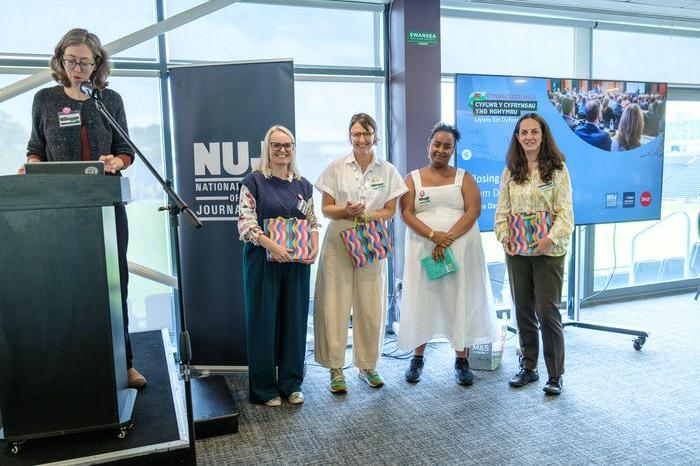
Davison thanked speakers and delegates for their contributions with special thanks given to the Welsh Executive Council and NUJ Wales. Davison presented gifts to Nicholson, Rachel, fellow WEC member Natasha Hirst, and NUJ Training Wales' Zena Chandler-Burnell in recognition of their hard work organising and delivering the conference.
NUJ WEC members will meet Heledd Fychan, media and culture minister, on Thursday 24 September to discuss how the government can fulfil its manifesto commitment to strengthen public interest journalism and press for the implementation of the Of and For Wales report recommendations.
//
Yr NUJ yn cynnal cynhadledd lwyddiannus ar ddyfodol y cyfryngau yng Nghymru
Cynhaliodd Cyngor Gweithredu Cymru yr NUJ (WEC) gynhadledd bwysig a ddaeth â gweithwyr yn y cyfryngau, lleisiau cymunedol a seneddwyr at ei gilydd i drafod dyfodol newyddiaduraeth er budd y cyhoedd yng Nghymru.
Yn dwyn y teitl 'Cyflwr y Cyfryngau yng Nghymru: Llunio ein Dyfodol', cynhaliwyd y gynhadledd ddwyieithog yng Ngerddi Soffia yng Nghaerdydd ar ddydd Sadwrn 19 Medi.
Estynnodd David Nicholson, cyd-gadeirydd yr WEC, groeso i'r cynrychiolwyr ac esboniodd darddiad y gynhadledd. Yn ystod y pandemig, lansiodd yr undeb Gynllun Adfer Newyddion, a addaswyd gan yr WEC ar gyfer sector y cyfryngau yng Nghymru. Llwyddodd y Cyngor i berswadio'r Gweinidog Diwylliant a'r Cyfryngau ar y pryd, Dawn Bowden, i sefydlu Gweithgor Newyddiaduraeth er Budd y Cyhoedd Cymru yn 2021. Yn sgil hyn, cyhoeddwyd yr adroddiad O Gymru ac i Gymru.
Yn greiddiol i argymhellion yr adroddiad mae creu Sefydliad Cyfryngau Cymru hyd braich a fyddai'n cyflawni nifer o swyddogaethau – yn cynnwys dosbarthu arian cyhoeddus i newyddiaduraeth yng Nghymru, rhoi terfyn ar yr ardaloedd o anialwch newyddion, a nodi anghenion penodol siaradwyr Cymraeg. “Mae gennym gyfle cyffrous i ddysgu oddi wrth brofiad gwledydd eraill drwy ein Sefydliad Cyfryngau ond hefyd i greu rhywbeth sy'n addas at ofynion unigryw Cymru,” meddai.
Disgrifiodd Nicholson lwyddiannau'r Gweithgor – fel sefydlu gohebydd penodedig yn y Senedd a chyhoeddi ymchwil ar amrywiaeth yn y cyfryngau, a ddangosodd bod menywod a newyddiadurwyr dosbarth gweithiol yn cael eu tangynrychioli yn y diwydiant. Ond nid yw argymhellion yr adroddiad wedi cael eu gweithredu o hyd.
Disgrifiodd Nicholson yr argyfwng sy'n wynebu sector y cyfryngau yng Nghymru, gan nodi nad oes gan leoedd fel Port Talbot bapur newydd lleol bellach er bod yno bump yn y gorffennol, gyda dros 20 o ohebwyr. Fodd bynnag, canmolodd Nicholson y gwaith rhagorol gan newyddiadurwyr Cymreig yn ddiweddar – yn enwedig wrth ddarparu gwybodaeth, dadansoddiadau, a chraffu manwl yn ystod yr etholiad diweddar yn y Senedd, pan welwyd y nifer uchaf erioed yn pleidleisio mewn etholiad Senedd, gyda'r mwyafrif o'r cyhoedd yng Nghymru yn pleidleisio am y tro cyntaf.
Meddai Nicholson:
“Heddiw byddwn yn mynd i'r afael â rhai o'r cwestiynau mwyaf sy'n wynebu diwydiant y cyfryngau yng Nghymru.
“Sut allwn ni wrthsefyll actorion annidwyll sy'n lledaenu camwybodaeth a chelwydd i gymunedau lleol?
“Sut allwn ni wella llythrennedd yn y cyfryngau ar draws Cymru i helpu'r cyhoedd i lywio'r ffrydiau dryslyd o wybodaeth sydd ar gael?
“Sut allwn ni sicrhau bod diwydiant y cyfryngau yn cynrychioli ein cymunedau'n gywir ledled Cymru?
“Sut allwn ni feithrin a chadw doniau newyddiaduraeth gorau Cymru?
“Mae heddiw yn canolbwyntio ar drafod syniadau ac atebion – mae hwn yn fater penagored. Mae newyddiaduraeth er budd y cyhoedd yn flodyn bregus yng Nghymru yn y ddwy iaith – mae angen ei meithrin a'i chefnogi i chwarae ei rhan yn ein democratiaeth a'n diwylliant.”
© Si Judd
Cyflwynodd Nicholson Rhun ap Iorwerth, prif weinidog Cymru, a agorodd y gynhadledd yn ffurfiol gyda'i brif anerchiad.
Meddai ap Iorwerth, a oedd yn newyddiadurwr ac yn ddarlledwr am bron 20 mlynedd cyn cael ei ethol: "Drwy fy rôl yn y cyfryngau ac fel aelod o'r NUJ, rwyf wedi dysgu nad swydd yn unig yw newyddiaduraeth – mae'n wasanaeth cyhoeddus."
Nododd y Prif Weinidog pa mor hanfodol bwysig yw’r Gweithgor Newyddiaduraeth er Budd y Cyhoedd yng Nghymru – yn cynnwys yr argymhellion yn yr adroddiad O Gymru ac i Gymru. "Rydym yn credu bod y wlad hon yn haeddu tirwedd gyfryngau sy'n hyderus, yn amrywiol ac yn gynaliadwy ac wedi'i gwreiddio mewn gwerth ac uchelgais."
Heb newyddiaduraeth gadarn a thirwedd gyfryngau iach, mae cynrychiolaeth a chraffu yn mynd ar goll. "Pan fod llywodraethau'n gwneud camgymeriadau, fel y gwna fy llywodraeth innau, mae'n siŵr, bydd angen adrodd sy'n eu dal i gyfrif," meddai ap Iorwerth.
Pwysleisiodd y Prif Weinidog bwysigrwydd aelodaeth o undeb llafur a safonau cyflogaeth boddhaol.
Meddai ap Iorwerth:
"Mae bod yn aelod o undeb yn ein hatgoffa bod y cyfryngau a newyddiaduraeth yn ymwneud â phobl hefyd. Os ydyn ni eisiau cael cyfryngau cynaliadwy, mae angen i ni fuddsoddi yn y bobl hynny. Mae angen swyddi da arnom, ynghyd â chyfleoedd hyfforddi priodol sy’n helpu pobl ifanc i ddod i mewn i'r proffesiwn, ac amrywiaeth yn ein hystafelloedd newyddion."
© Si Judd
Yng nghyfarfod llawn cyntaf y diwrnod, rhoddwyd ystyriaeth i'r bwlch gwybodaeth o ran datganoli. Roedd y panel yn cynnwys: Joe Rossiter, cyd-gyfarwyddwr y Sefydliad Materion Cymreig; y cymdeithion ymchwil o Brifysgol Caerdydd, Dr. Keighley Perkins a Dr. Maxwell Modell, ynghyd â'r newyddiadurwr ymchwiliol arobryn, Will Hayward. Dilynwyd hwn gan ddau weithdy grŵp a gyflwynwyd gan Dan Mason ar y defnydd o ddeallusrwydd artiffisial mewn newyddiaduraeth, a Richard Nosworthy ar sut gall cyfathrebwyr proffesiynol gael yr effaith mwyaf yn y byd cyfryngau newydd.
Trefnwyd y ddau weithdy gan Hyfforddiant NUJ Cymru, sef prosiect a reolir gan Rachel Howells, cyd-gadeirydd WEC. Wrth gyflwyno sesiwn y prynhawn, nododd Howells pa mor bwysig yw buddsoddi mewn sgiliau a datblygiad proffesiynol.
Meddai Howells:
“Rydym yn falch iawn o gael y cyfle i ddarparu'r math hwn o hyfforddiant trwy gydol y flwyddyn, diolch i Gronfa Ddysgu Undebau Cymru (WULF) Llywodraeth Cymru. Rydym yn gweld sut mae'r hyfforddiant hwn yn newid bywydau, yn helpu pobl sydd angen sgiliau newydd – efallai oherwydd colli swydd, newid gyrfa, neu wrth weld dyletswyddau eu swydd yn newid o flaen eu llygaid gan beri gofid ynghylch cadw i fyny â datblygiadau technegol, neu hyd yn oed gweithwyr ifanc sy'n ceisio ennill eu plwyf yn y diwydiant. Mae'r sgiliau hyn, a chael person cyfeillgar yno i'ch helpu yn ystod cyfnod heriol, yn gwneud gwahaniaeth anferth i'n dysgwyr.”
Anogodd Howells y cynrychiolwyr i gofrestru ar restr bostio Hyfforddiant NUJ Cymru a chysylltu â'r hyfforddwyr os oes ganddynt unrhyw anghenion gweithle penodol.
© Si Judd
Cyflwynwyd sesiwn prynhawn y gynhadledd gan Laura Doel, Ysgrifennydd Cyffredinol TUC Cymru. Dechreuodd Doel ei gyrfa fel newyddiadurwr. Ar ôl gadael yr ysgol yn 16 oed, dilynodd gwrs addysg uwch mewn newyddiaduraeth cyn dod yn ohebydd dan hyfforddiant gyda’r Merthyr Express.
Dywedodd Doel bod colli teitlau lleol yn arwain i golli storïau pobl. "Fel undebwyr llafur, rydym yn aml yn trafod llais gweithwyr a llais cymunedau [...] Mae newyddiaduraeth yn rhoi llais i'r rhain," meddai Doel, a nododd y gall cau teitlau lleol olygu nad yw'r wybodaeth a dderbynnir yn adlewyrchu bywyd mewn cymunedau Cymreig na'r setliad datganoli. "Mae'r NUJ wedi bod yn llygad ei le yn pwysleisio'r mater o ddiffyg gwybodaeth yng Nghymru ers blynyddoedd lawer. Pan fod ystafelloedd newyddion yn crebachu, mae llai o storïau'n cael sylw. Pan gollir newyddiadurwyr, collir arbenigedd. Pan fod craffu'n gwanhau, mae atebolrwydd yn gwanhau."
Disgrifiodd Doel yr ymgyrch llwyddiannus gan yr NUJ i sefydlu Gweithgor Newyddiaduraeth er Budd y Cyhoedd Cymru a nododd pa mor bwysig yw hi bod y llywodraeth yn gweithredu argymhellion yr adroddiad O Gymru ac i Gymru, fel datblygu lefelau iach o lythrennedd cyfryngau a chreu Sefydliad Cyfryngau Cymru i gefnogi tirwedd gyfryngau amrywiol, luosog, ac a ariennir yn addas.
Esboniodd Doel rôl newyddiaduraeth mewn normaleiddio'r defnydd o'r Gymraeg ym mywyd bob dydd ac wrth feithrin undod cymdeithasol. Dywedodd Doel bod gwaith yr NUJ yng Nghymru yn rhan annatod o ymgyrch 'Cymru Unedig' y TUC gan fod newyddiadurwyr yn darparu amgylchedd wybodaeth o safon sy'n caniatáu i bobl wneud penderfyniadau gwybodus. Wedi'r cyfan, "y bobl sy'n gweithio yw'r rhai sy'n talu'r pris pan fod atebolrwydd democrataidd yn cael ei wanhau."
Gan ddisgrifio newyddiaduraeth fel "gwasanaeth cyhoeddus", dywedodd Doel bod cyllid cyhoeddus yn hanfodol, ynghyd â llywodraethu cadarn a mesurau diogelu i osgoi ymyrraeth wleidyddol, gan grybwyll Denmarc, Y Ffindir a Norwy fel enghreifftiau o gyllid cyhoeddus cryf ac annibyniaeth olygyddol.
Pwysleisiodd Ysgrifennydd Cyffredinol TUC Cymru bod rhaid i newyddiadurwyr gael cyflog digonol a llais yn eu gweithle. "Er mwyn cael sector cyfryngau llewyrchus, mae'n rhaid cael gweithwyr cyfryngau llewyrchus. Mae'n anodd cynhyrchu newyddiaduraeth o safon uchel a denu newyddiadurwyr ifanc i’r diwydiant pan fod gweithwyr yn wynebu ansicrwydd o ran swyddi a chyflogau ansefydlog.
Meddai Doel:
"Fel cyn-newyddiadurwr, rwy'n deall y pwysau sy'n wynebu'r proffesiwn. Fel undebwr llafur, rwy'n deall llais y gweithwyr. Fel Ysgrifennydd Cyffredinol TUC Cymru, rwy'n deall yr angen am sefydliadau democrataidd cryf [...] Mae hyn yn bwysig i bawb sy'n ymboeni ynghylch dyfodol Cymru."
© Si Judd
Yn ystod cyfarfodydd llawn y prynhawn, rhoddwyd ystyriaeth i gyllid ar gyfer sector y cyfryngau gyda Rhys Owen, gohebydd gwleidyddol Golwg; David James, golygydd WalesOnline; Emily Trahair, gynt o'r cylchgrawn Planet; a Helgard Krause, prif weithredwr Cyngor Llyfrau Cymru. Cadeirydd y sesiwn oedd Richard Gurner, golygydd a chyhoeddwr y Caerphilly Observer.
Dilynwyd y sesiwn hon gan y cyfarfod llawn terfynol ar yr heriau a'r cyfleoedd sy'n wynebu sector darlledu Cymru. Roedd y panel yn cynnwys: Max Evans, BBC Wales; Branwen Thomas, ITV Cymru Wales; Mali Williams, S4C; Elin Haf Gruffydd Jones, Yâ¯Ganolfan Uwchefrydiau Cymreig a Cheltaidd; a Nathan Spackman, Bro Radio.
Caewyd y gynhadledd gan Laura Davison, ysgrifennydd cyffredinol yr NUJ, gyda galwad i weithredu.
"Nid prawf y gynhadledd hon yw a gawsom drafodaethau da," meddai. "Y prawf yw a fydd ein trafodaethau yn arwain at weithredu."
Yn ystod y diwrnod, disgrifiodd siaradwyr a chynrychiolwyr sut mae refeniwiau gostyngol, cau ystafell newyddion a llai o swyddi cyhoeddi wedi rhoi pwysau cynyddol ar y diwydiant. Enghreifftiwyd hyn gan gyhoeddiad Reach yn gynharach yr wythnos hon ei fod yn bwriadu torri 160 o swyddi ychwanegol. "Mae Reach, a’r gweithleoedd tebyg niferus yn y sector cyfryngau, yn dangos pam fod angen enbyd am weithredu i ddatblygu modelau cyllid newydd," meddai Davison. "Mae’n rhaid i ni lobïo dros greu swyddi yn y sector er mwyn darparu cyfleoedd ystyrlon i bobl ifanc fynd i mewn i'r proffesiwn, a sicrwydd swyddi'r rhai sydd ynddo'n barod."
Dywedodd Davison fod dyfodol newyddiaduraeth yn destun pryder i'r mudiad llafur ehangach gan fod ardaloedd o anialwch newyddion yn golygu bod cymunedau mewn perygl o golli mynediad at newyddiaduraeth hyperleol angenrheidiol a dibynadwy. "Trwy gefnogi ymgyrch Cymru Unedig y TUC, gallwn helpu i fynd i'r afael â'r diffyg gwybodaeth yng Nghymru," meddai. "Mae angen mynediad at newyddiaduraeth hyperleol annibynnol, o safon uchel ar ein cymunedau amrywiol [...] mae angen i ni gydnabod gwerth cyhoeddi yn y Gymraeg a sicrhau bod hyn yn cael yr adnoddau a'r cyfleoedd sydd eu hangen er mwyn iddo lwyddo."
Gan gyfeirio at brif araith ap Iorwerth, dywedodd Davison: "Mae'n galonogol bod gennym rywun sydd â phrofiad personol o fod yn newyddiadurwr wrth galon llywodraeth Cymru. Bellach, mae angen i ni gymell y llywodraeth newydd hon i weithredu ar yr argymhellion yn yr adroddiad 'O Gymru ac i Gymru'."
I gloi, dywedodd Davison:
"Ni ellir sicrhau dyfodol y cyfryngau yng Nghymru drwy fyw yn y gobaith y bydd pethau'n gwella. Caiff ei sicrhau pan fydd pobl yn dod at ei gilydd, trwy eu hundeb llafur a grwpiau eraill sy’n cyflwyno'r achos dros newid, ac yna'n peri i'r newid hwnnw ddigwydd. Mae gan lywodraethau'r grym i ymyrryd a chefnogi ein sector cyfryngau.
"Mae heddiw wedi darparu'r fforwm ar gyfer trafod newid, ac mae'n gyfrifoldeb ar bob un ohonom i beri i hyn ddigwydd fel y caiff pob newyddiadurwr y cyfle i fynd i mewn i'r proffesiwn hwn. Ac mae'r bobl sy'n gwneud y gwaith hwn eisoes yn haeddu'r gefnogaeth a'r sicrwydd i allu parhau i'w wneud am lawer o flynyddoedd i ddod.
"Felly, mae'n rhaid i ni ymadael heddiw, nid gyda set o nodiadau'n unig, ond hefyd gyda phenderfyniad a rennir i sicrhau bod pethau'n digwydd."
© Si Judd
Estynnodd Davison ddiolch i'r siaradwyr a'r cynrychiolwyr am eu cyfraniadau, gyda diolch arbennig i Gyngor Gweithredu Cymru ac NUJ Cymru. Cyflwynodd Davison roddion i Nicholson, Rachel, cyd-aelod y WEC, Natasha Hirst, ac i Zena Chandler-Burnell o Hyfforddiant NUJ Cymru mewn cydnabyddiaeth o'u gwaith caled yn trefnu ac yn rhedeg y gynhadledd.
Bydd aelodau WEC yr NUJ yn cwrdd â Heledd Fychan, y gweinidog diwylliant a'r cyfryngau, ar ddydd Iau 24 Medi i drafod sut gall y llywodraeth gyflawni ei hymrwymiad maniffesto i gryfhau newyddiaduraeth er budd y cyhoedd, ac i bwyso am weithredu argymhellion yr adroddiad O Gymru ac i Gymru.