Honouring Our Communities: the vital role of journalists in amplifying Black voices
This year’s theme for Black History Month, ‘Honouring Our Communities’, invites us to recognise the individuals whose everyday contributions shape, support and sustain Black life.
While community leaders, volunteers, educators, healthcare workers and activists are often celebrated for their impact, journalists also play a crucial role in ensuring that the stories, experiences and achievements of Black communities are seen, heard and valued.
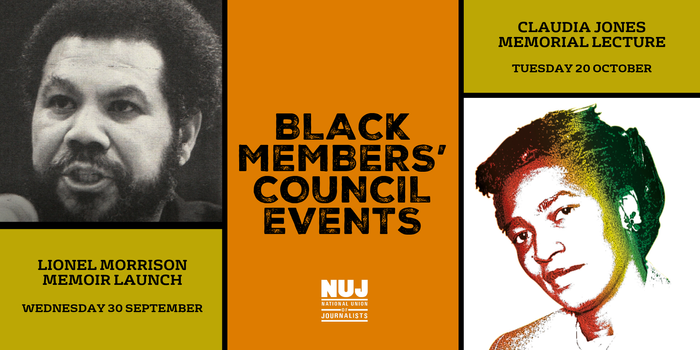
One individual who shaped journalism and trade unionism in the UK and Ireland is Lionel Morrison, the NUJ’s first Black president. Born in South Africa, Morrison was the youngest of the 156 ‘Treason Trialists’ detained for resistance to apartheid. After five months in prison, he sought exile in 1961 and came to Britain.
Championing anti-racism in journalism, he worked for various newspapers - including the Evening Standard, The Mirror, The People, and The Telegraph - with his coverage of events such as the trial of the Mangrove Nine helping to shape narratives around Black communities in the UK. He also became a public relations officer for the Commission for Racial Equality (CRE) and volunteered for many years for the Notting Hill Housing Trust, directly impacting Black people’s lives.
Yesterday (30 September) the NUJ held an event at Headland House to mark Morrison's extraordinary life and the launch of his posthumous memoir, Footprints: A Black Journalist's Fight Against Apartheid in South Africa and in Exile.
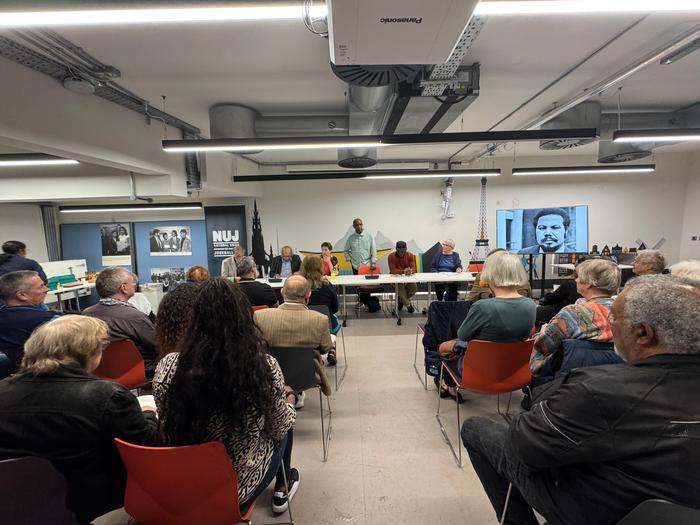
The celebration of Lionel Morrison at Headland House.
© Sam Taylor
Giving a voice to untold stories
As Morrison’s work demonstrates, journalism at its best serves as a bridge between communities and the wider public, shining a light on stories that might otherwise go unnoticed. Across the UK, journalists’ work highlights the experiences of Black individuals and communities, documenting both challenges and triumphs.
Representation matters. By covering grassroots initiatives and reporting stories, Black communities are empowered to see themselves reflected in the media. Journalists contribute by challenging stereotypes, broadening perspectives and creating space for diverse voices to be heard.
Importance of local journalism
Local journalism plays a vital role in strengthening communities. Claudia Jones, a pioneering Black journalist and founder of the West Indian Gazette, showed this through her work championing local issues and bringing people together. As a key figure behind the Notting Hill Carnival, her legacy underscores the power of journalism to inform, unite, and celebrate communities.
The NUJ Black Members’ Council (BMC) will be holding its annual Claudia Jones Memorial Lecture on 20 October 2026. This year’s event will be hosted by the Guardian chapel with guest speaker Nesrine Malik, Guardian columnist, discussing Black narratives in the media.
Journalists provide platforms for important discussions about equality, opportunity and social progress. Through thoughtful reporting and meaningful storytelling, they help communities engage with complex issues while elevating the voices of those directly affected.
These conversations can drive understanding, encourage civic participation and create opportunities for positive change. By documenting people’s experiences and amplifying community perspectives, journalists help ensure that Black voices remain central to discussions that affect their lives and futures.