
How the George Viner Memorial Fund supports young journalists
Hana Williams, 2025 George Viner Scholar, reflects on pursuing a career in journalism.
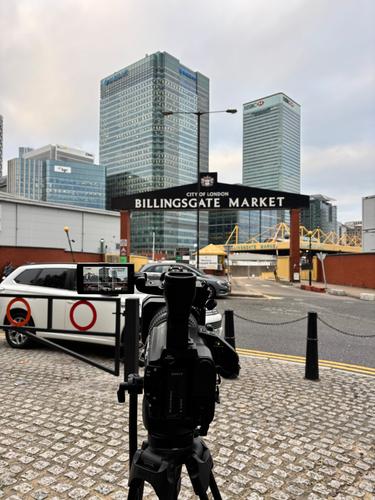
If you’d told teenage me - a mixed British-Pakistani girl who rarely saw anyone who looked like her on TV - that one day I’d be studying journalism, presenting live bulletins, interviewing councillors, and lugging a camera through Billingsgate Market at 6am, I’d have laughed. Loudly. But here I am, four months into my MA Broadcast Journalism course at City University.
I became interested in journalism while studying history, where I became obsessed with storytelling and how it shapes who gets remembered and who gets overlooked. The more I learned about colonial legacies and selective storytelling, the more I realised I didn’t want to just study narratives - I wanted to tell them fairly, accurately, and with empathy. Journalism felt like the natural next step.
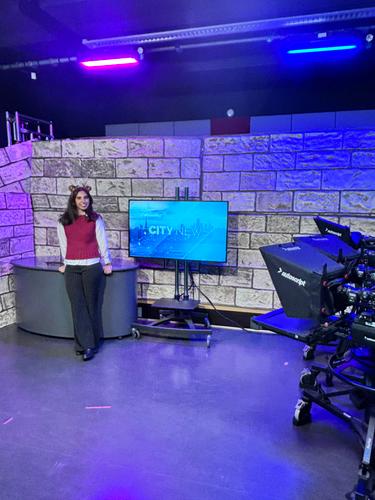
I wouldn’t be here without the NUJ and the George Viner Memorial Fund. The NUJ’s work resonates with me because it aims to help everyone realise their potential, free from barriers and discrimination. That commitment is visible in everything they do, from legal support to campaigns, equality councils and their funding programmes. The George Viner Memorial Fund’s mission, ‘to diversify newsrooms and support underrepresented voices’, helps Black and Asian students who demonstrate a commitment to journalism, have a place on an approved course, and need financial assistance.
After just missing out on the ITV traineeship, I knew this course would sharpen my skills and boost my confidence. Walking into university on my first day, I was taken aback by how little diversity I saw in the room. Growing up in London, I’d assumed that the statistic about only 10% of journalists coming from ethnic minority backgrounds was exaggerated.
Since starting the course, I’ve interviewed different people from all walks of life - partly to refine my interviewing skills and partly to challenge my own assumptions. I’ve talked with Ethiopian, Hyat Mohammed, about her experience as a refugee for a radio feature and discussed inclusive access at Hampstead Heath ponds with trans campaigner Bobbi Pickard.
I’ve also found myself in some wonderfully chaotic locations, like Billingsgate Fish Market, where I learned to film while protecting the tripod from fish water, and picked up the skill of chatting with fishmongers who had been awake since midnight. I’ve conducted street interviews with Croydon residents about their thoughts on Live Facial Recognition and persuaded a police officer to talk about surveillance in the area.
I’ve learned how to shoot, script, edit, handle temperamental technology, and present live bulletins – without tripping over a single cable! I’ve also realised how vital trade unions are in this industry. Knowing that there are schemes actively supporting students like me has made entering this field feel attainable and more exciting than I ever imagined.