
Lancet strike action continues as publication impacted
NUJ members at The Lancet have moved into the third consecutive day of strike action over pay. Publication of The Lancet - one of the world’s leading medical journals - will be impacted with fewer articles published in a reduced edition.
On 22 September, National Union of Journalists (NUJ) members at The Lancet staged a walkout and held action short of a strike over a two-week period. This followed a ballot in which 97.8% of members on a turnout of 87.5% voted for industrial action over the company's failure to offer an adequate pay deal despite extensive negotiations.
With no movement from the employer on its pay offer since the action last month and attempts by the NUJ to facilitate negotiations through the employment mediator Acas, union members called three consecutive days of further strikes.
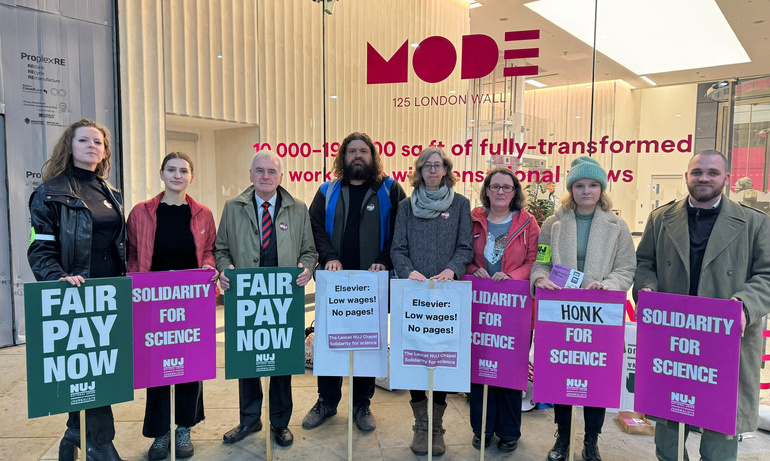
Day two of Lancet strike outside company HQ
© Bea Bennett
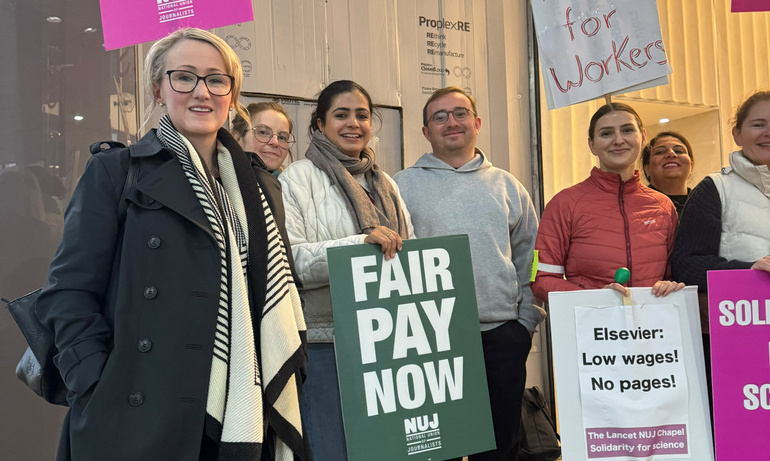
Rebecca Long-Bailey, NUJ parliamentary group chair joins picket in solidarity
© Bea Bennett
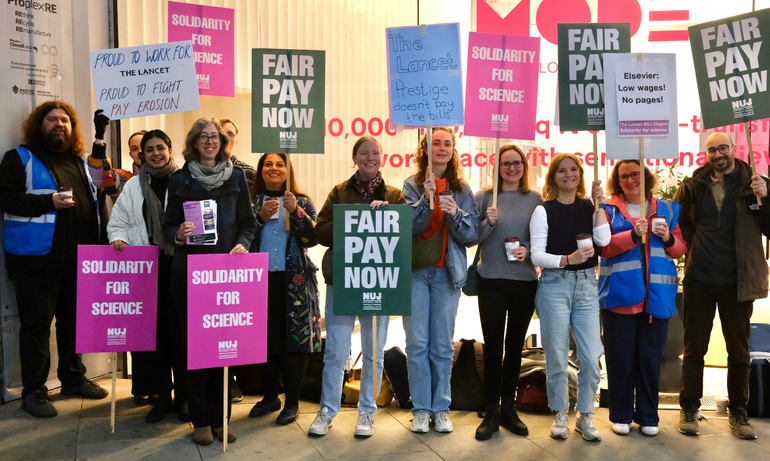
NUJ members picket outside The Lancet's London HQ.
© Awil Mohamoud
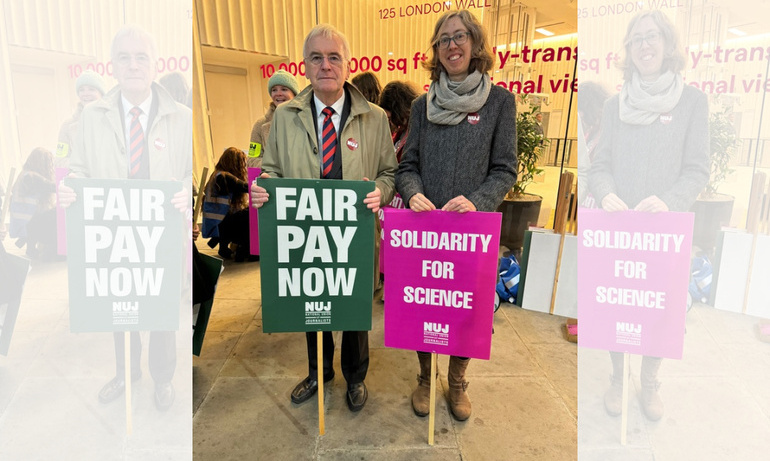
John McDonnell MP, NUJ parliamentary group secretary join picket in solidarity
© Bea Bennett
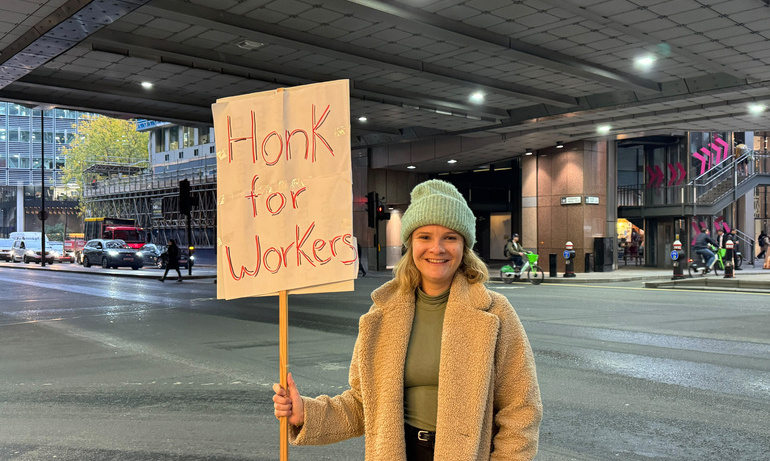
Strikers get creative with signs
© Bea Bennett
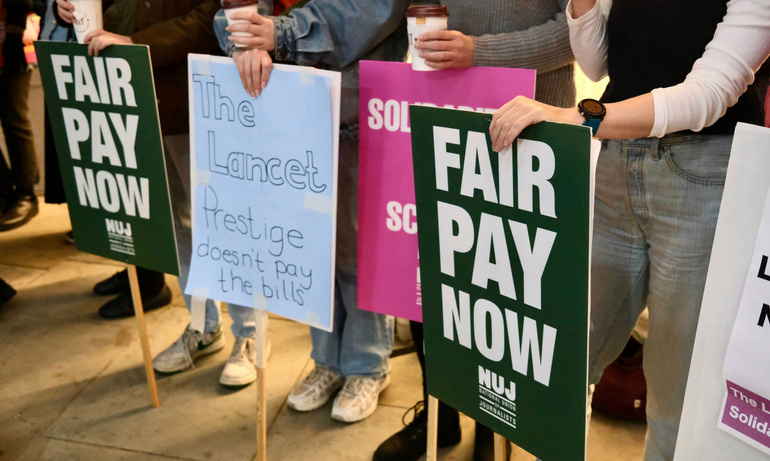
Members holding 'Fair Pay Now' and 'Solidarity for Science' placards.
© Awil Mohamoud
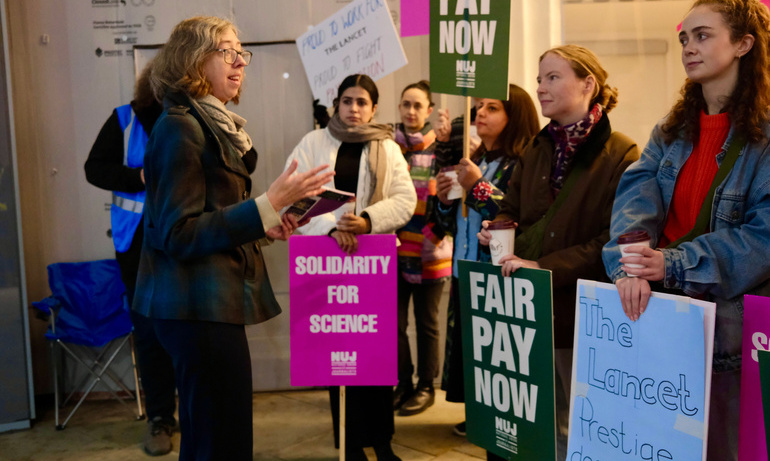
Laura Davison, NUJ general secretary, speaking with Lancet members at the picket.
© Awil Mohamoud
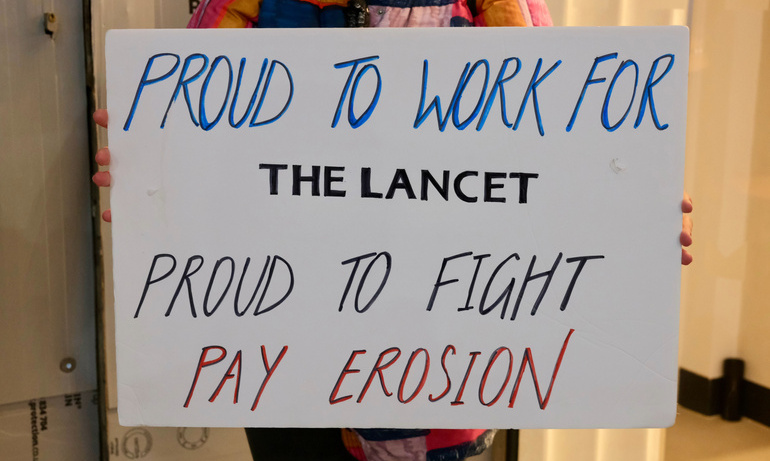
Members have also made homemade placards for the picket.
© Awil Mohamoud

NUJ megaphone at The Lancet picket.
© Awil Mohamoud
Messages expressing solidarity with members have come in from across the union and beyond.
John McDonnell, NUJ parliamentary group secretary, said:
“I am shocked that these loyal professionals have been forced to take unprecedented industrial action. I urge the employer to get round the negotiating table for serious negotiations to settle this dispute.”
Fran McNulty, NUJ joint president, said:
"To all our comrades at The Lancet, expressing solidarity to you as you strike, yet again, to demand a fair wage for your work. Sending you solidarity - your union stands behind you."
Georgina Morris, NUJ vice-president, said:
"I would like to send my best wishes and support to everyone involved in the Lancet strike as you return to the picket line again. The determination and unity you've all shown has been inspiring.
"The stand you are taking is one that will strike a chord with many of our members, particularly those who have seen their pay eroded while executives and shareholders reap the rewards.
"It is staggering that a company with profits as vast as those recorded by Elsevier is refusing to properly reward its staff. Your work is central to the company's success and their decision to allow your pay to be eroded puts the long-term sustainability of the business at risk.
"Hundreds of members of the scientific community have joined the NUJ in supporting your action because we all recognise the value of your work in an age of disinformation, misinformation and AI slop. If you can no longer afford to stay in the job, it is not only your readers but also wider society that will lose out.
"I join you and all your supporters in urging management at the Lancet to do the right thing and return to negotiations."
Tony Sheldon, NUJ Netherlands chair and NEC member, said:
"NUJ Netherlands wishes the Lancet strikers all the best this week. Given the huge operating profits of Elsevier's parent company RELX, consistently offering Lancet staff below inflation pay offers is simply shameful. This is the unacceptable face of academic publishing."
The NUJ Lancet chapel has said that if the company fails to make a meaningful new pay offer, members will be prepared to take further days of industrial action. The union has called on the company to return to the negotiating table and avoid further disruption to the business.
Laura Davison, NUJ general secretary, said:
“Our members do not want to be out on strike but they have been forced into this action by management’s unwillingness to address the issue of sustained low pay – something the company can easily do given its huge profits. Our members have contributed massively to building The Lancet’s stellar reputation globally, as reflected in the overwhelmingly supportive response to our open letter.
“The responsibility for resolving this dispute rests with the employer, and we remain committed to reaching an agreement. However, if management fails to make a meaningful new offer, our members are prepared to take additional days of industrial action. To avoid further disruption to the business, we urge the company to meet our reps and return to the negotiating table with an offer our members can accept.”
More than 300 academics in science, including a Nobel Prize winner, other journalists, and MPs have signed an open letter addressed to the CEO of Elsevier, which owns The Lancet, and CEO of the parent group, RELX – expressing support for workers and reflecting their calls for fair pay. Elsevier reported an adjusted operating profit of £1.035 billion in 2025, which translates to a 7% underlying profit increase and a 38% profit margin.
Along with their signatures, some left comments for senior management on the vital role Lancet workers play not only within the science field, but also wider society through “fighting the good fight against mis- and disinformation.”
One professor said: “AI Large Language Models (LLMs) are wreaking havoc on publishing standards. We need decently paid humans to safeguard the standards of credible science.”
Another professor said: “Diminishing [workers’] role does not strengthen scholarship; it erodes confidence, risks error, and ultimately harms the research ecosystem. Supporting the expertise that safeguards publication quality is essential if science is to remain trustworthy and robust in the face of mounting challenges.”
The salaries of Lancet workers have steadily decreased in real-terms over the years, leaving many significantly worse off than they were five years ago despite their growing experience, expertise, and responsibilities.
One NUJ member who is on strike said: "Low pay impacts every part of our lives. Living in London, the cost of living is increasing. We all have student loans because you need a degree to do this job, and those loans aren’t getting paid off at the rate we’re paid.”
Another member said: “Keeping this job is making colleagues poorer in real terms year-on-year, which, given the resources available to the company that owns the Lancet, is unconscionable.”
They added: “At a time when science is under attack from AI – with so many submissions coming in that are not written by humans – it's clear we need that human element. We need properly qualified people who know what they’re looking at. If this [low pay issue] carries on, people will start leaving these jobs and AI will find its way into the literature. So, it couldn’t be more important to make sure colleagues are compensated in the way they deserve.”